Rethinking the experience behind GovGPT, from core journeys to MVP-ready details.
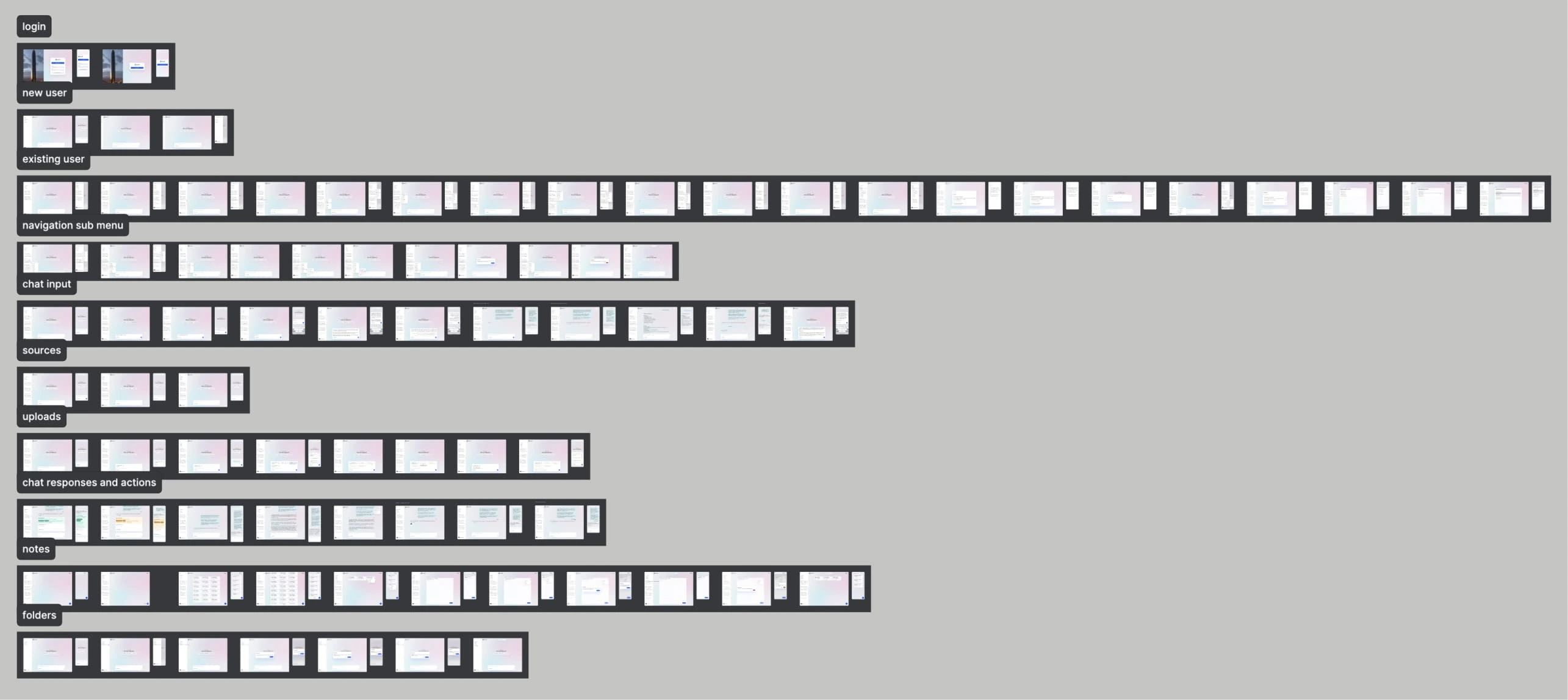
GovGPT is an AI-powered workspace developed for Abu Dhabi government teams. I was brought in on Friday evening to rethink the UX and UI of its MVP, address overlooked use cases and edge cases, and deliver 82 screens across desktop and mobile.
With development starting Wednesday, the deadline was Tuesday afternoon, but we completed everything by Monday night.
My role
Product Designer & UX/UI
Project for
AI Factory, Department of Government Enablement
About the project
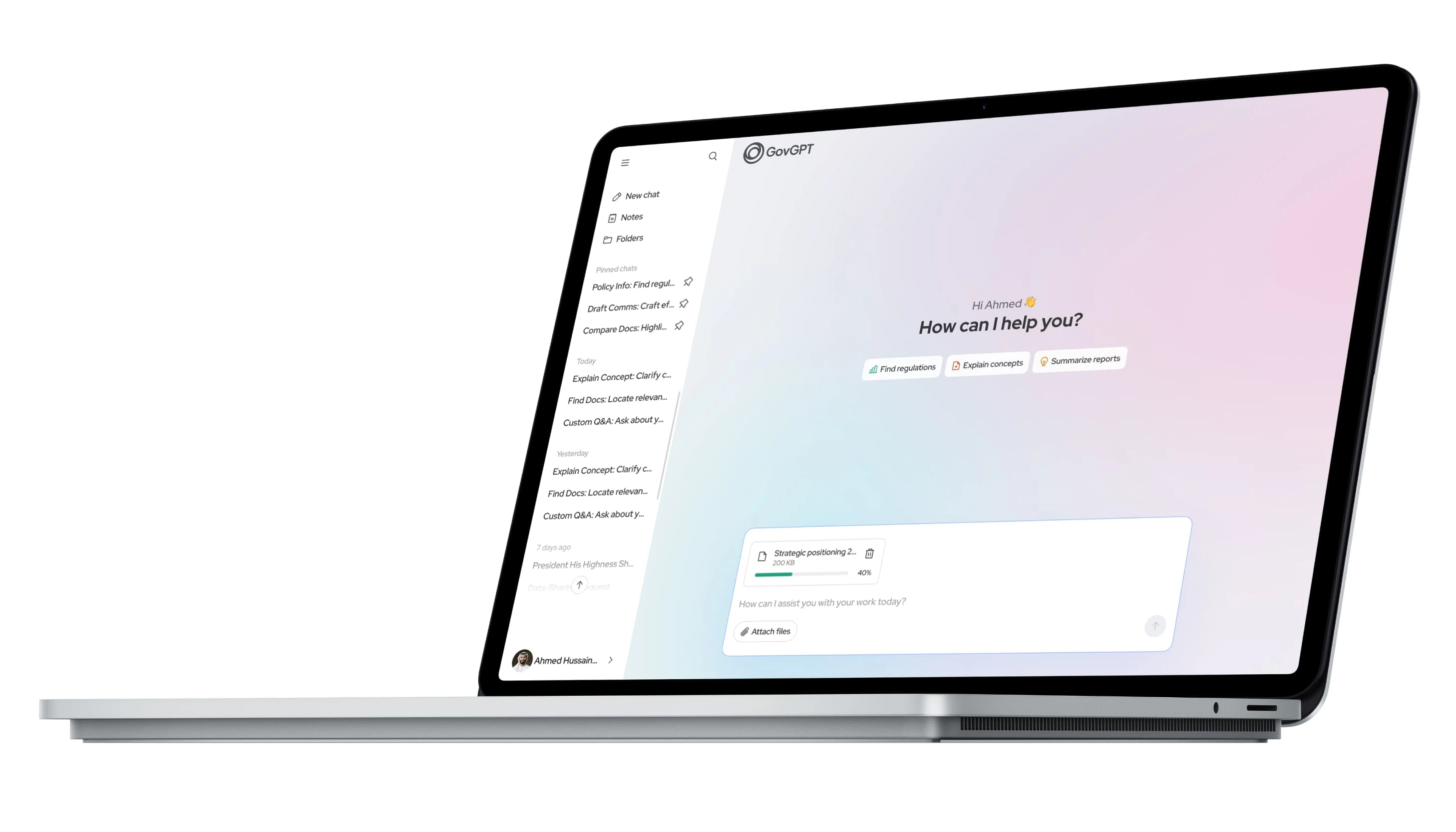
GovGPT is an AI-powered workspace designed for government teams in Abu Dhabi.
The MVP brings together AI conversations, document uploads, information sources and tools for organising and managing work in one place.
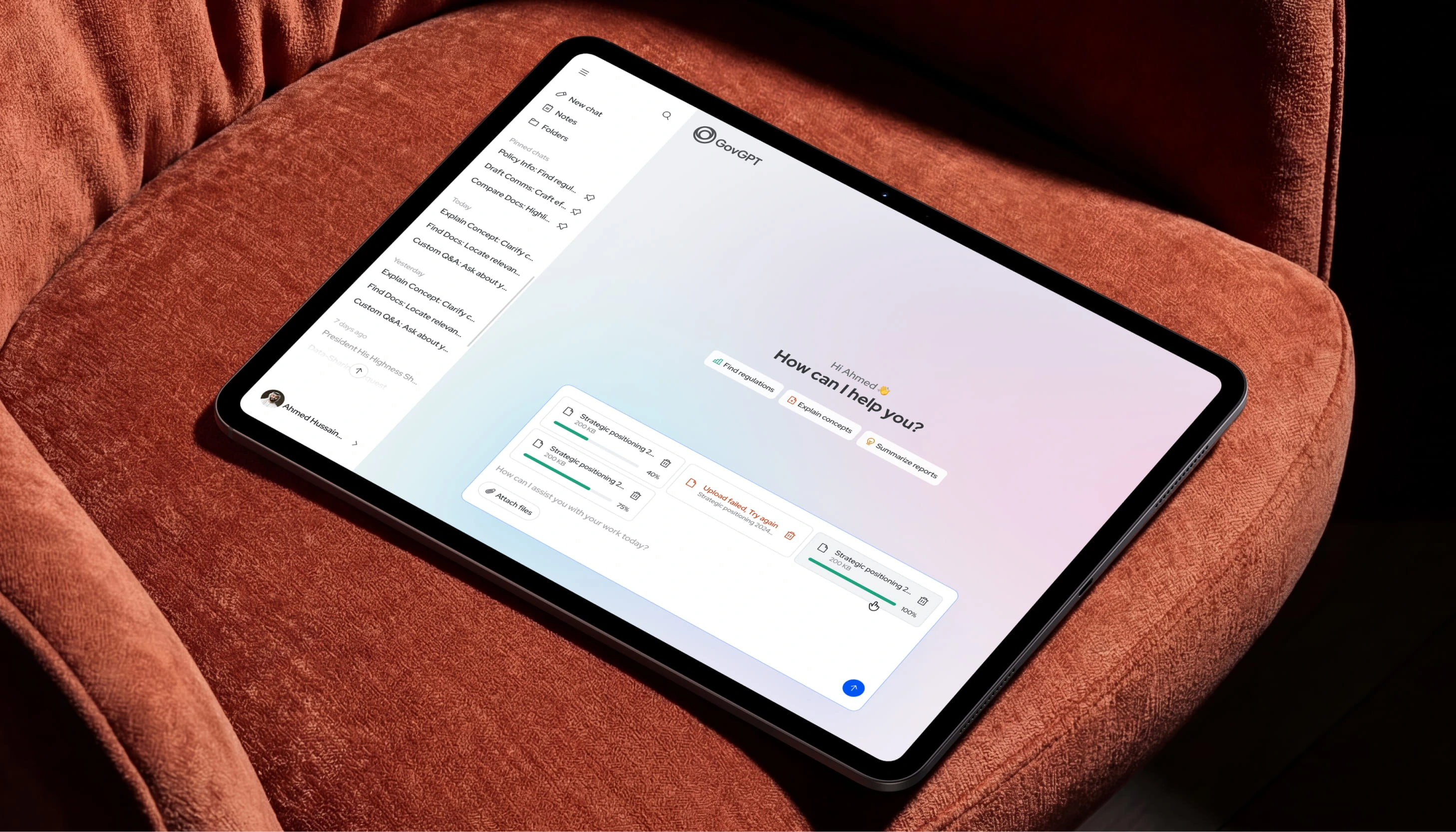
The experience goes beyond a simple chat interface. Users can ask questions, work with uploaded files, revisit conversations, organise notes and folders, and share or export responses. The product needed to support these connected journeys across desktop and mobile, while keeping everyday interactions simple and familiar.
The challenge
It started with a call on Friday evening from a Design Lead at an Abu Dhabi government entity.
His team was working on the GovGPT MVP, but he was not happy with the existing designs. Several important use cases had been overlooked, the UX needed rethinking, and the UI was not where it needed to be.
Development was scheduled to begin on Wednesday, which meant the designs had to be ready by Tuesday afternoon.
We started by reviewing the existing work together, going through the screens and identifying missing journeys, interactions and edge cases. It quickly became clear that this needed more than a visual refresh. The experience had to be reconsidered properly, but without the luxury of a normal project timeline.
I had just a few days to establish a consistent design foundation, work through the journeys across desktop and mobile, and prepare everything for developer handoff.
Building the foundations first
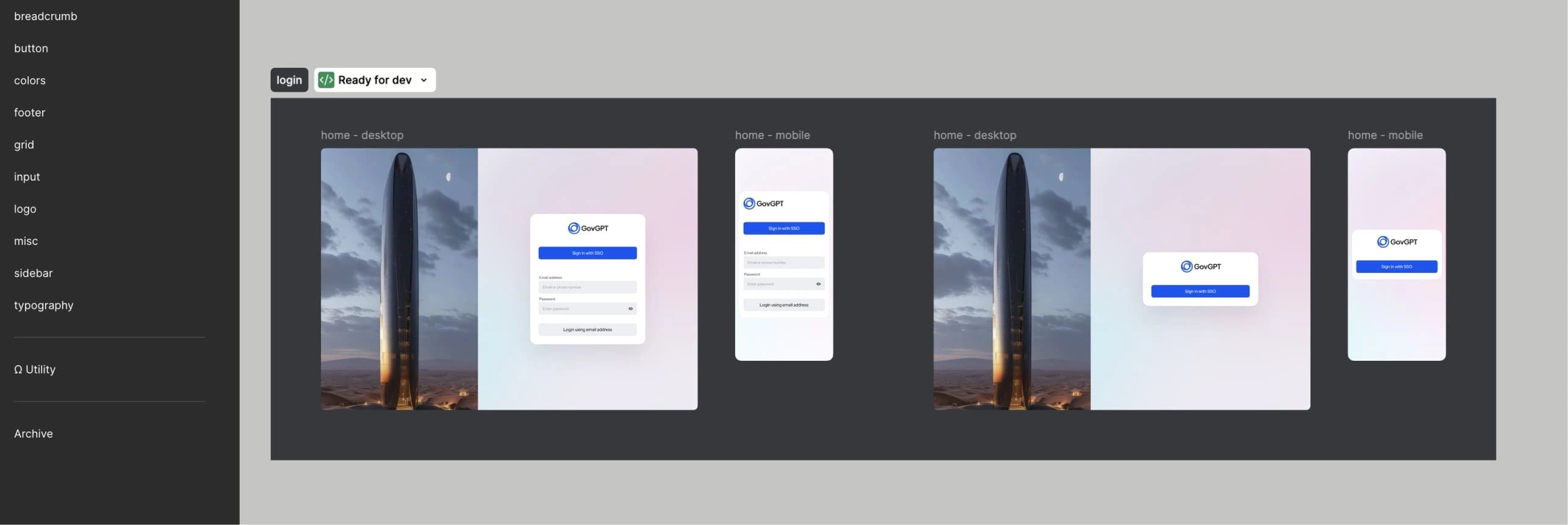
Before getting into individual screens, I spent the first few hours setting up the basics: typography, colours and reusable components.
With so many journeys to cover in such little time, I needed a consistent foundation to work from. It helped me move faster, make changes easily and keep the experience consistent across desktop and mobile.
Working through the journeys
With the foundations in place, I started working through the MVP one journey at a time.
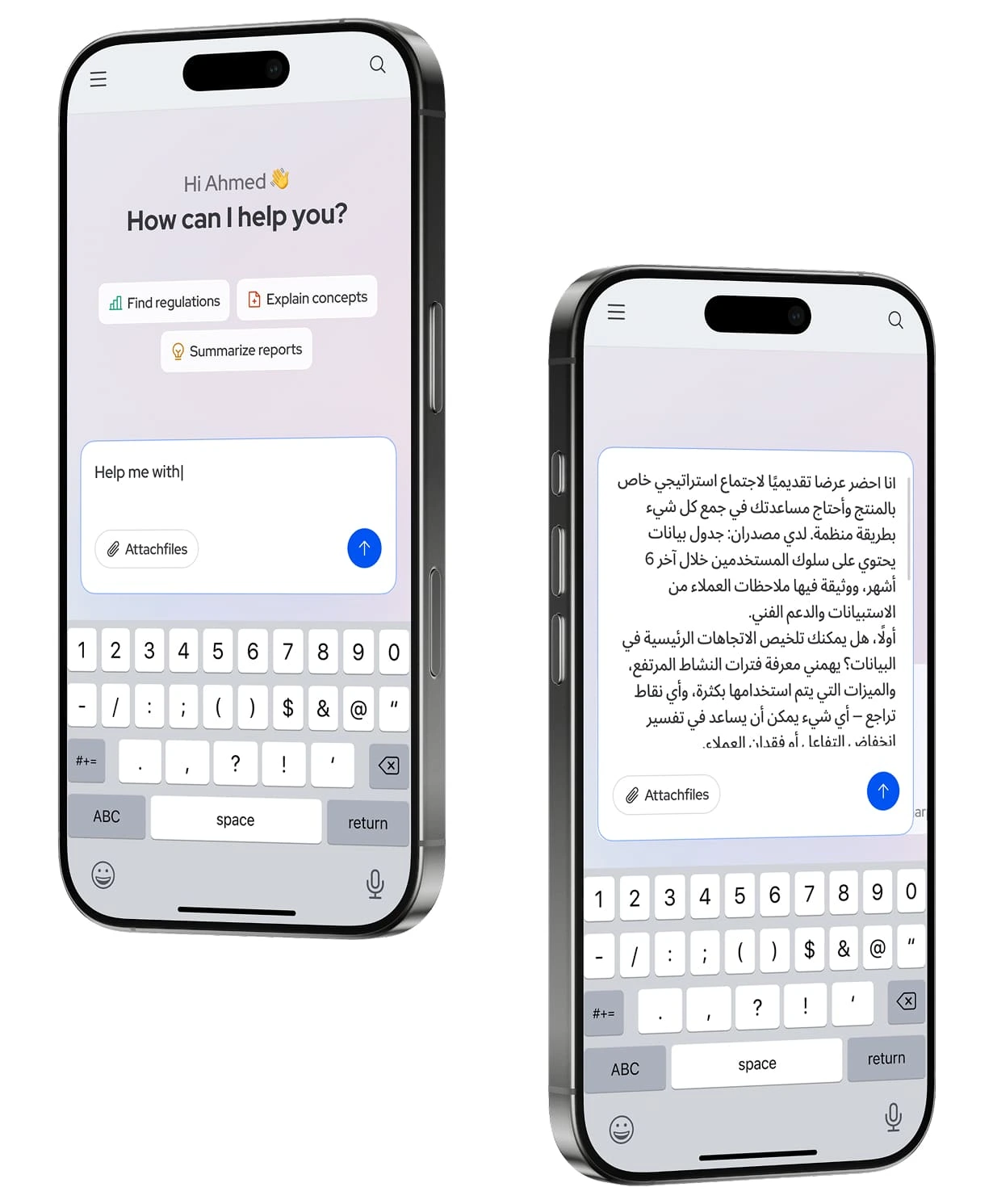
GovGPT was more than a chat interface. Users needed to upload files, manage conversations, organise notes and folders, and share or export responses. Each journey came with its own interactions, variations and edge cases.
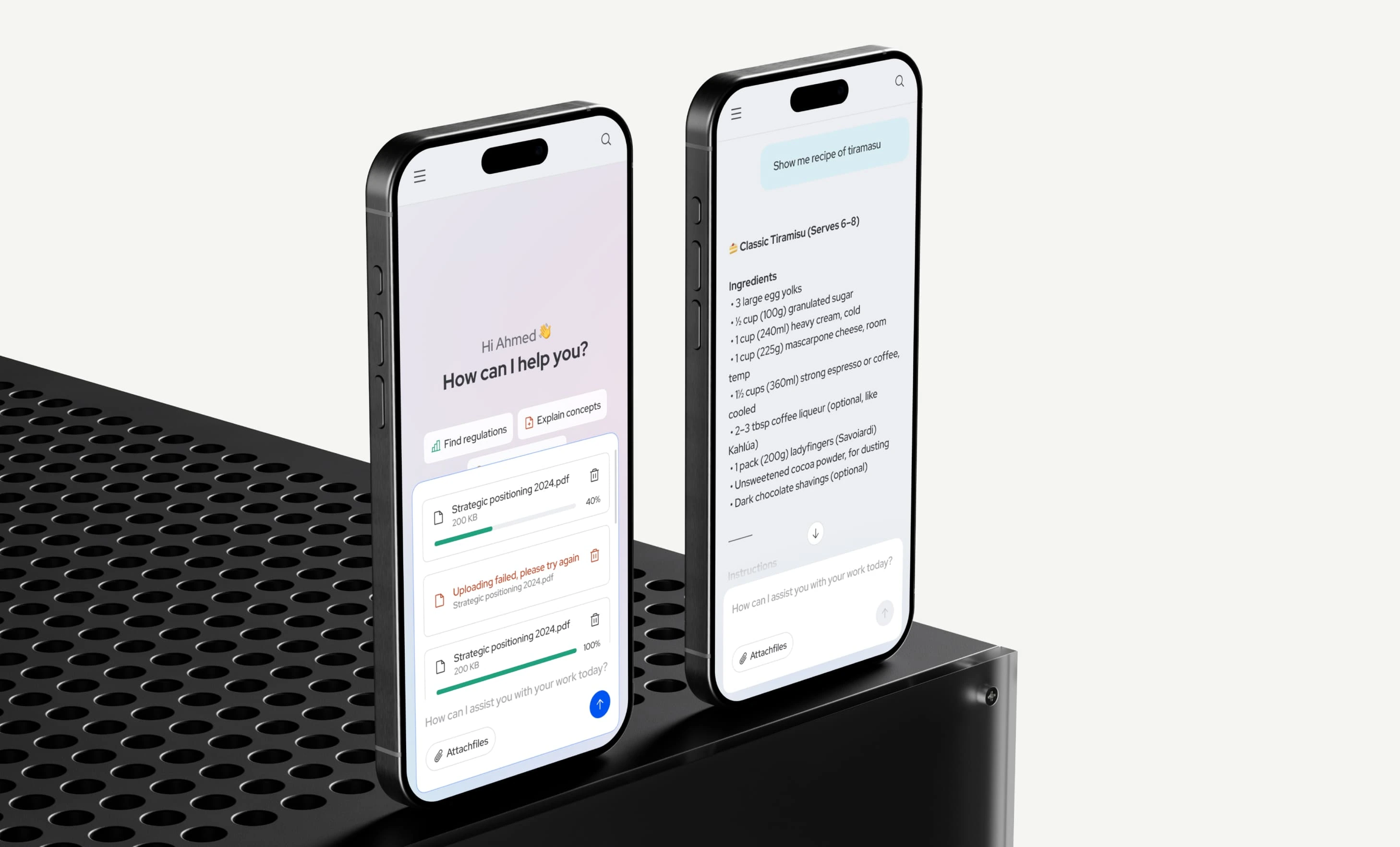
I worked through these alongside the main screens, considering what happens when an upload fails, an input gets too long or someone uses the product on mobile. The aim was to give developers a clearer picture of how the experience should behave, not just how it should look.
Keeping decisions moving
We had two calls every day to review progress, discuss feedback and make sure we were heading in the right direction.
With development starting Wednesday, we could not afford to discover misunderstandings at the last minute. These regular check-ins helped us make decisions quickly while I continued working through the remaining journeys independently.
The outcome
What started as an urgent Friday evening call was ready for handoff by Monday night, ahead of the Tuesday afternoon deadline.
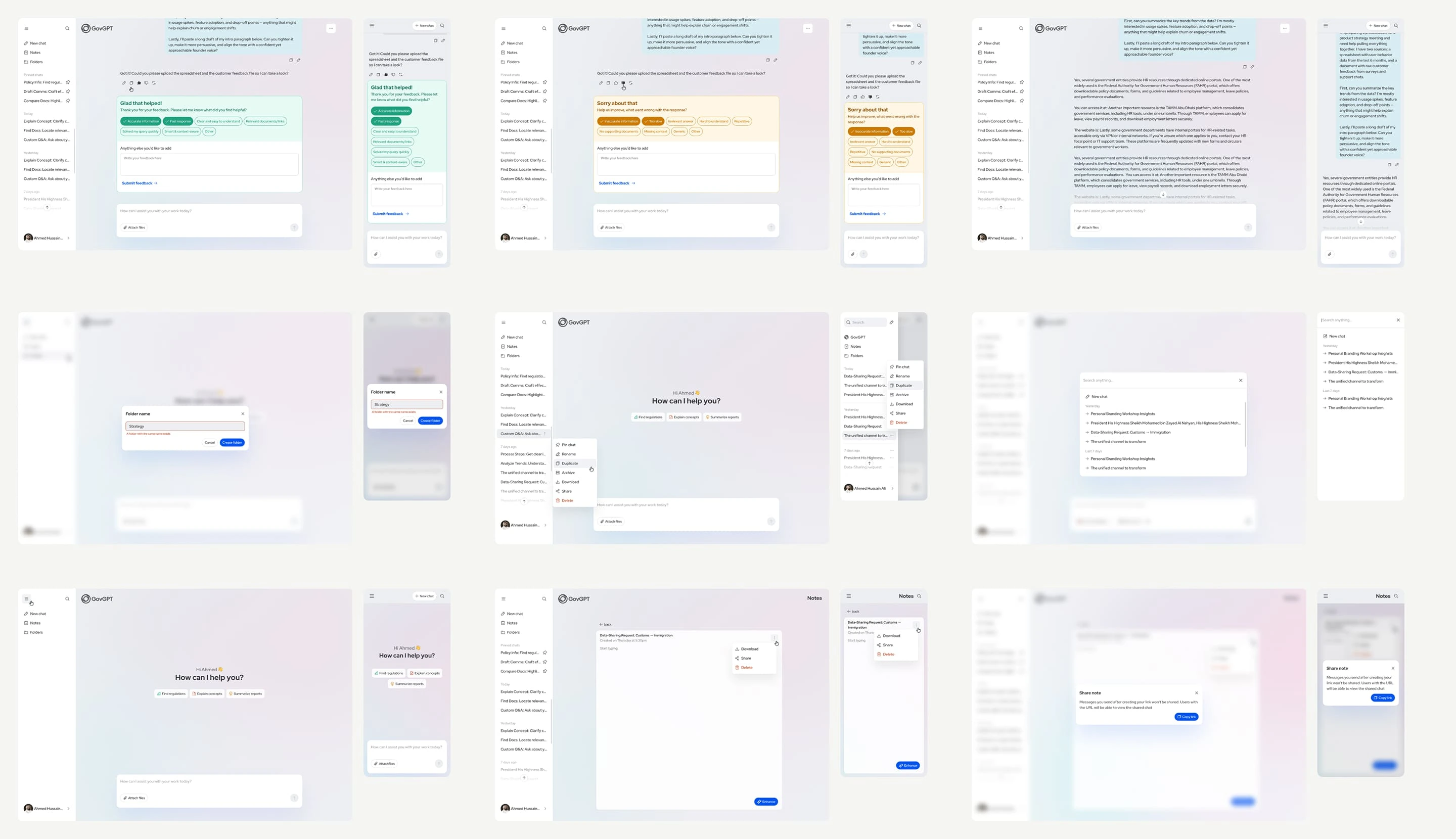
In just three days, I delivered 82 screens covering the GovGPT MVP across desktop and mobile, including the main journeys, interactions and edge cases.
The Design Lead was happy with the result, and the team had the designs ready before development began on Wednesday. He later offered me a full-time role to continue working on AI projects, which was an unexpected outcome from a very busy weekend.
What I took away
This project reminded me that working fast does not mean skipping the thinking.
Taking time to understand what was missing, setting up reusable components and checking in regularly helped us avoid unnecessary rework.
Three days was not much time, but having a clear direction made all the difference.